Ready to embrace your natural texture? Learn everything about transitioning from relaxed to natural hair, including protective styles, care tips, and what to expect during your journey.
Transitioning from relaxed to natural hair is a beautiful journey of self-discovery and hair health. At Milly's Fab in Tucson, we've guided countless clients through successful transitions. Whether you're considering the big chop or a long transition, here's everything you need to know.
What is Transitioning?
Transitioning is the process of growing out your natural hair texture while gradually cutting off chemically relaxed or texturized ends. You'll have two distinct textures�natural new growth and relaxed ends�until all relaxed hair is removed.
Two Transition Approaches
The Big Chop
Cutting off all relaxed hair at once, leaving only natural hair.
Pros: - Immediate transition to natural hair - No dealing with two textures - Fresh start - Faster journey to full natural hair - Liberating experience
Cons: - Dramatic length loss - Requires confidence with short hair - Limited styling options initially - May take adjustment period
Best For: Those ready for dramatic change, comfortable with short hair, wanting immediate results.
Long-Term Transition
Gradually growing out natural hair while maintaining length, eventually cutting off relaxed ends over time (typically 12-24 months).
Pros: - Maintain length during transition - Gradual adjustment to natural texture - More styling options - Less dramatic change - Time to learn natural hair care
Cons: - Managing two textures is challenging - Longer journey to fully natural - Requires patience and careful handling - Demarcation line (where textures meet) is fragile
Best For: Those attached to length, wanting gradual change, needing time to adjust.
The Transition Timeline
Months 1-3: Early Transition - New growth becomes noticeable - Two textures start to show - Learning curve begins - Excitement and adjustment
Months 4-6: Mid-Transition - Significant new growth - Two textures more pronounced - Styling becomes more challenging - May experience frustration
Months 7-12: Late Transition - Substantial natural hair - Ready for mini-chops (gradual cutting) - More confident with natural texture - Styling improves
Months 12-24: Final Stages - Majority of hair is natural - Final cuts to remove relaxed ends - Fully embracing natural texture - Journey nearly complete
Managing Two Textures
The biggest challenge of transitioning is caring for two different hair textures simultaneously.
Gentle Handling is Critical
The demarcation line (where natural meets relaxed) is the weakest, most fragile point. Handle with extreme care to prevent breakage.
Protection Strategies: - Minimize manipulation - Use protective styles - Deep condition weekly - Avoid heat styling - Be extra gentle when detangling - Keep hair moisturized
Moisturizing Two Textures
Natural New Growth Needs: - Heavy moisture - Rich butters and oils - Frequent deep conditioning - Water-based products
Relaxed Ends Need: - Protein treatments (more fragile) - Moisture balance - Gentle handling - Protection from breakage
Solution: Use moisturizing products on entire head, add protein treatments to relaxed ends specifically.
Detangling Transitioning Hair
Proper Technique: 1. Work on damp, conditioner-coated hair 2. Section hair into 4-8 parts 3. Start from ends (relaxed), work to roots (natural) 4. Use wide-tooth comb or fingers 5. Be extremely gentle at demarcation line 6. Never force through tangles 7. Take your time
Best Protective Styles for Transitioning
Protective styles are essential for successful transitioning, minimizing manipulation of the fragile demarcation line.
Highly Recommended Styles
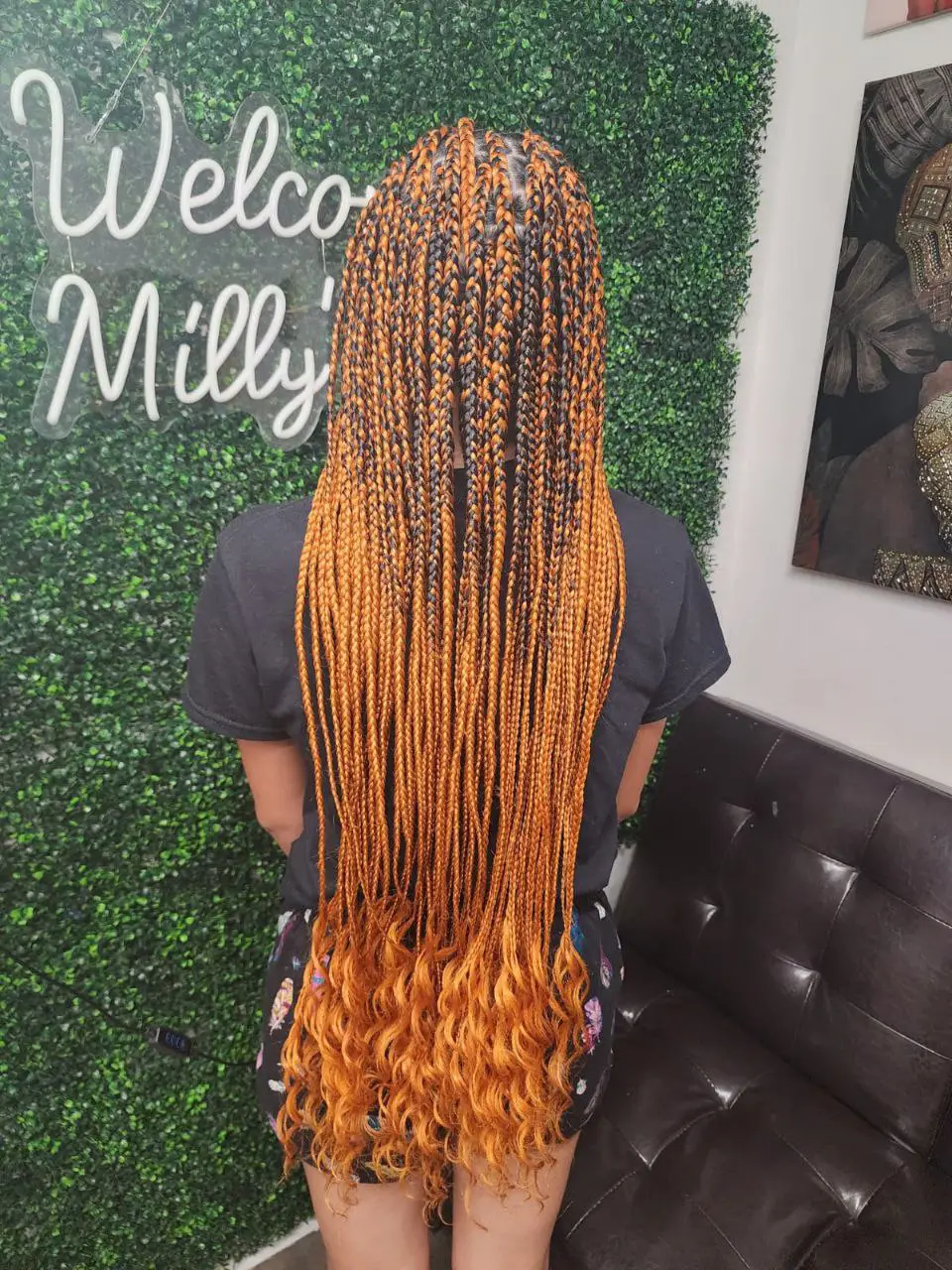
Box Braids: Excellent for hiding two textures, lasting 6-8 weeks, and offering versatile styling.
Cornrows: Great for scalp access, lasting 2-4 weeks, and providing a neat appearance.
Twists: Gentle on hair, lasting 2-4 weeks, and easy to install and remove.
Crochet Braids: Quick installation, lasting 4-8 weeks, and offering versatile looks.
Wigs: Ultimate protection, daily style changes, and complete hair rest.
Weaves/Sew-Ins: Long-lasting (6-8 weeks), versatile, and protective with proper care.
Styles to Avoid
Tight Ponytails: Stress on demarcation line and edges.
Excessive Heat Styling: Damages both textures, especially fragile relaxed ends.
Styles Requiring Manipulation: Daily styling stresses weak points.
Transitioning Hair Care Routine
Weekly Wash Day
Step 1: Pre-Poo (optional but helpful) - Apply oil or conditioner to dry hair - Focus on relaxed ends - Leave for 30 minutes - Helps prevent hygral fatigue
Step 2: Cleanse - Use sulfate-free shampoo - Focus on scalp - Be gentle with length - Rinse thoroughly
Step 3: Deep Condition - Apply generous amount - Focus on demarcation line and ends - Use heat for 20-30 minutes - Rinse with cool water
Step 4: Protein Treatment (every 2-4 weeks) - Apply to relaxed ends primarily - Follow product instructions - Don't overdo it - Always follow with moisturizing conditioner
Step 5: Leave-In and Style - Apply leave-in conditioner - Seal with oil - Style into protective style or low-manipulation look
Daily Maintenance
Morning: - Remove satin bonnet/scarf - Lightly moisturize if needed - Style as desired (minimal manipulation)
Evening: - Apply light oil or moisturizer - Protect with satin bonnet/scarf - Sleep on satin pillowcase
Products for Transitioning Hair
Essential Products
Moisturizing Shampoo: Sulfate-free, gentle cleansing
Deep Conditioner: Rich, moisturizing formula for weekly use
Protein Treatment: Strengthens relaxed ends (use sparingly)
Leave-In Conditioner: Daily moisture and detangling
Natural Oils: Jojoba, sweet almond, argan for sealing
Edge Control: Keeps styles neat without alcohol
Products to Avoid
Sulfate Shampoos: Strip moisture from both textures
Heavy Silicones: Cause buildup, prevent moisture absorption
Alcohol-Based Products: Dry out hair
Harsh Chemicals: Further damage already fragile hair
Styling Options for Transitioning Hair
Low-Manipulation Styles
Buns and Updos: Keep ends tucked and protected
Twist-Outs/Braid-Outs: Blend two textures beautifully
Bantu Knots: Create uniform curl pattern
Flat Twists: Sleek, protective, versatile
Blending Two Textures
Roller Sets: Create uniform curl pattern throughout
Flexi-Rod Sets: Blend textures with defined curls
Braid-Outs: Natural-looking waves that blend textures
Twist-Outs: Defined curls that minimize texture difference
When to Cut Relaxed Ends
Mini-Chops (Gradual Cutting)
Trim relaxed ends every 2-3 months as you gain more natural hair.
Benefits: - Gradual length adjustment - Easier to manage - Less dramatic - Maintain some length
The Final Big Chop
Cut all remaining relaxed ends once you have sufficient natural hair (typically 6-12 inches of new growth).
Signs You're Ready: - Comfortable with natural texture - Confident in natural hair care - Tired of managing two textures - Ready for fully natural hair
Common Transition Challenges
Challenge 1: Breakage at Demarcation Line
Solution: Deep condition weekly, minimize manipulation, use protective styles, handle gently, keep hair moisturized.
Challenge 2: Frustration with Styling
Solution: Embrace protective styles, learn blending techniques, be patient with yourself, seek professional help, join natural hair communities.
Challenge 3: Wanting to Give Up
Solution: Remember your why, look at progress photos, connect with others transitioning, try new styles, be patient�it's temporary.
Challenge 4: Pressure to Big Chop
Solution: Transition at your own pace, ignore outside pressure, do what feels right for you, there's no "right" way.
Professional Support at Milly's Fab
At our Tucson salon, we support your transition journey:
Transition Services: - Protective style installations - Deep conditioning treatments - Trim and mini-chop services - Styling consultations - Product recommendations - Ongoing support and guidance
Expert Advice: - Personalized transition plans - Texture management strategies - Style recommendations - Problem-solving - Encouragement and support
Embracing Your Natural Texture
Transitioning is more than a hair journey�it's a journey of self-acceptance and empowerment.
Mindset Shifts: - Your natural texture is beautiful - Patience is essential - Progress over perfection - Community support helps - Celebrate small victories
Conclusion
Transitioning to natural hair is a rewarding journey that requires patience, proper care, and the right support. Whether you choose the big chop or long-term transition, success comes from gentle handling, protective styling, and consistent moisture.
At Milly's Fab Hair Salon in East Tucson, we're here to support every step of your natural hair journey.
Ready to start or continue your transition? Visit us at 2914 East 22nd Street in Tucson, or call (520) 551-2211. We baby your hair�naturally!
*Content was rephrased for compliance with licensing restrictions.*
Keywords:
Share this article:
Related Services
Interested in this style? Check out our professional services:
About Milly's Fab Team
The expert stylists at Milly's Fab Hair Salon in East Tucson are passionate about natural hair care and protective styling. We're dedicated to helping clients achieve healthy, beautiful hair through expert braiding, loc maintenance, and personalized care.
Learn more about our salon →